Tuesday, 20 November 2018

Office 2019 vs Office 2016 - a comparison

So with my new Mac has come a new suite of productivity tools from Microsoft - Office 2019. Yes I was indeed reluctant to try this out, but here it is. First, a couple of comparisons between the ribbons in Outlook:


Screen Shot 2018-11-20 at 1.27.34 pm
Outlook 2019 Ribbon (Mac)


Screen Shot 2018-11-20 at 1.30.21 pm
Outlook 2016 Ribbon (PC)

And the Calendar part of Outlook:
Screen Shot 2018-11-20 at 1.28.48 pm
Outlook Calendar 2019

Screen Shot 2018-11-20 at 1.30.33 pm
Outlook Calendar 2016

Fundamentally it all handles the same, but the UI change is quite marked. In fact, this is reflected across all the suite - Word, Excel and Powerpoint all have tidier interfaces on the Mac. Whether this is reflective of the difference in styles between Apple and Microsoft or not I'm unsure about. It's definitely tidier and less busy - this appeals to me. The actual driving of the applications is largely the same.

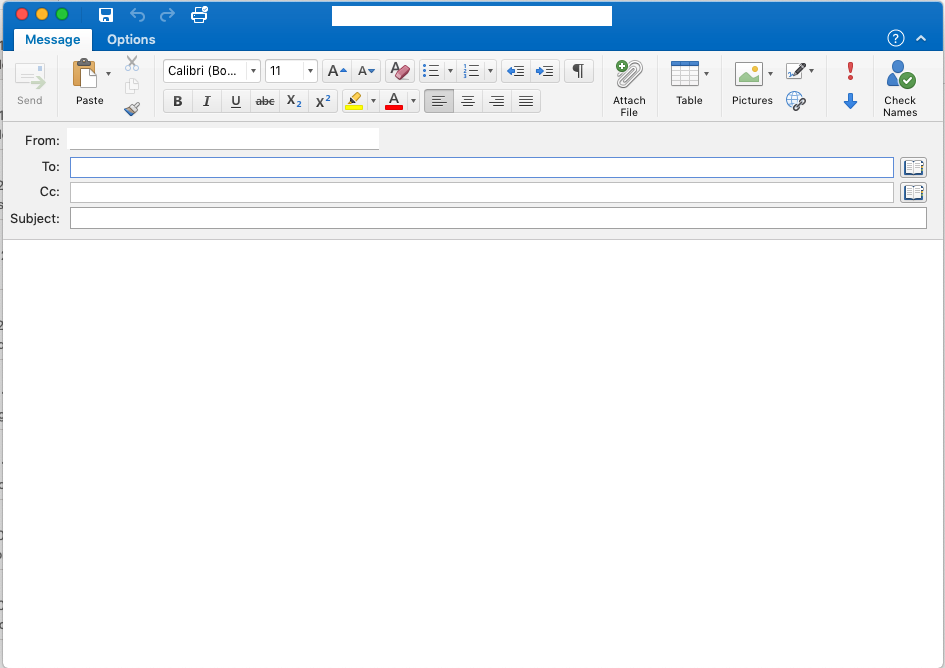
Here is the compose window in a new email:
Screen Shot 2018-11-20 at 1.28.18 pm
New Email Outlook 2019

It's all pretty much the same, but you can see a more clean approach has been taken with the newer applications. I like it. I don't like Outlook as a rule, but I like this version of it better than previous versions.
The proof is in the utility - and both versions of Office are very useful. I'm still bewildered at times by the array of things you can do in Excel - it's one very full featured piece of software, and I probably will never use all of the stuff even in Word - which is probably why my preference is a simpler text editor like Pages.

Here's a snippet from Excel and you'll note that next to the green "Maximise" button in the top left hand corner is what looks like a little notebook - this is the File menu where new file etc all live:

Screen Shot 2018-11-20 at 1.40.39 pm
Excel 2019

Again it's a slightly cleaner interface than 2016, but everything is there. With all the "File" activities hidden in that new button, there's nothing really missed out on. An Excel aficionado will probably say there are a million things not there but I'm not that guy.

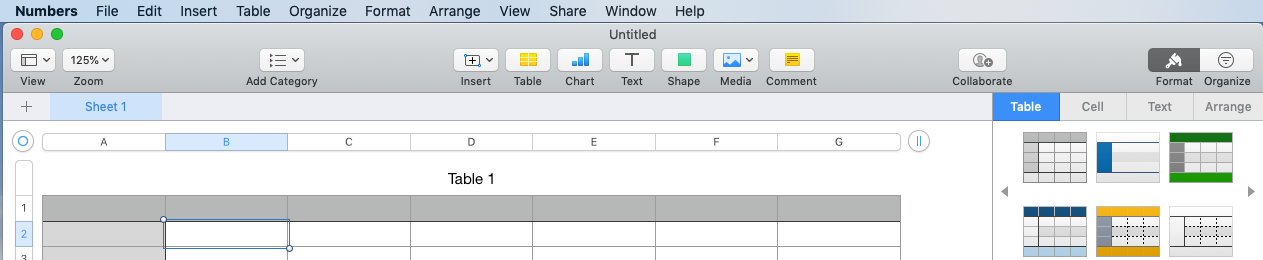
Compare that ribbon to the Numbers ribbon:
Screen Shot 2018-11-20 at 1.43.37 pm
The simplicity of Numbers


It's a big UI (User Interface) difference. Given the rather limited activities I execute in spreadsheets, either one is suitable for my needs. I know that Numbers isn't adequate for some of the guys here at work who use Excel in extraordinary ways, but for the regular punter I think you'll find Numbers to be adequate.
At any rate, I thought you might find this interesting to see a brief comparison between the versions of Office and how different they look on different OS platforms. I can only hope that Microsoft release a version for Linux and I'll compare that one too!
I've cross posted this to my regular blogging account, so if you're interested in my wider range of thoughts check it out: abeath.blog

Tuesday, 2 October 2018

Review: Linux Mint 19 "Tara"

Since I changed jobs and no longer use my big Linux box day to day, it's been harder to find the time to work with Linux, and in particular Mint. I love Mint and I've been delighted to use it for many years now. When I took my work PC home, and fired it up I was poignantly reminded how much I enjoyed working in the Linux desktop world and how I'd missed it. Windows 10 just doesn't compare and even Mac OS X (while very good) still lacked a certain something.

I've been using Mint 18 for some time and enjoyed it, so when I finally caught up to checking out "Tara" I was very interested to see what the go is. Here is the link to the release blog post about it: https://blog.linuxmint.com/?p=3597 It's a Long Term release (LTS) so it'll be good until 2023. I've found Mint to be updated and looked after for the full term of their LTS releases - something to commend the team on. Now, what to run the test install on?

I managed to get my hands on a 4 year old HP ENVY TouchSmart Ultrabook (or "Sleekbook" 14-k124tx is the model) for this review. It's stats are fairly impressive for an older machine: Intel Core i7-4500U, 8GB RAM, 128GB SSD drive. It has a touch screen, and dual video adaptors (low power Intel and nVidia for the good times), and multi touch mouse pad. This one had a dodgy Windows 7 install on it that kept blue screening, even with a fresh install of Windows 7. I've been running Mint as my primary workstation on it for several days now with nary a worry.

Into the review then:

I booted into the LiveUSB version of Mint for a quick poke around. Everything looked the goods so I chose "Install".

The installation of Mint was flawless - it identified the UEFI nature of the boot system, and asked if I wanted to change it around, or was I happy to blow away the previous install and just go with Mint. I let it get rid of Windows and move through the familiar installation process taking the default options for everything. I like how it is specific about the encryption option for the disk leading to a more secure install.

First boot was not long after and very fast - particularly on this rather lean little machine.

The initial impression was that the presentation of the desktop environment was polished and had the usual, rather plain theme applied. I'm more than happy with this though as I find too much flash gets in the way of doing what I need to. The new crop of desktop backgrounds are lovely - lots of colour and sharp imagery to enjoy. It was very fast too - launching Firefox took mere moments and everything was quick.

I was delighted to see the operating system ask me if I wanted to set up backups when I first tried to run Mint Update. This is a very clever idea and uses a built in wizard to run the flamboyantly named "Backup Tool". Not only will this use rsync to back up one's files, but it will also backup your software selection (and restore both groups of files as required). Given this computer is a test bed and I expect to mess around with it a fair bit, I didn't bother setting it up. The initial update was smooth and a quick reboot got me back into a fully patched machine.

Uh oh though - no wireless! Aargh! This machine has some fairly specialised hardware and requires some third party apps. I've found this to be hit and miss at times in the past, but found it to be no real issue here:

In the background you can see one of the superb "Tara" backgrounds. Everything works now - WiFi and the nVidia drivers as well. I'm not sure if there really is a boost in the graphics as I'm only doing desktop stuff on it (and even then mostly web based activities) so check out a gamer's review for that sort of thing.

Another quick reboot (now up to 3) and good to go. Installed Chromium, nmap and a few other bits and bobs and all good. Mint is effortless to manage apps with - much like Debian and Ubuntu and this is a big part of the reason I like it.

The install base wasn't huge either. On a laptop like this, where a Windows 10 install can smash a 128GB disk in no time, the disk usage looks like this:

You can see that it's only 11GB for the whole install, and applications (and also my imaginative naming scheme for computers!).

With regards to usability and stability - Mint offers the usual round of suspects for desktop productivity - LibreOffice, VLC, Transmission, Firefox and the like. In the last few days of using Mint on this machine, there have been zero issues, no failures, no stoppages. This is on a machine recently removed from our fleet for stability problems! It wouldn't make a day without a BSOD on a fresh Windows install. Pretty good!

Anyone who reads this blog knows I'm not big on fancy pictures and stuff, just the meat of my thoughts and for what its worth - Mint is great. I was very happy with 18 and it's variants, and thus far, I'm very pleased with 19. For older computers, for computers kids will touch or for people willing to try something new, it is my choice for a Windows or Apple alternative. In fact, even if you're a power Windows user, it might be worth putting the ISO onto a USB and Live booting it for fun and seeing what it can do. Over a USB3 connection and a USB3 thumb drive it's very usable. The install from there is fast and simple.

*** Update to this post:

I've since upgraded my home PC to Mint 19. The desktop PC experience is every bit as good as the laptop experience and the straightforward in place upgrade from 18 to 19 was easy. There is a lot to love about this install from a user perspective. Get around it!


Tuesday, 17 July 2018

osTicket Lessons - Filtering and Exchange


Here is a thing I’ve discovered and it will hopefully save someone else hours of time. 

I have osTicket installed, with IMAP enabled to download emails from our Exchange mail server into the system. I then have filters enabled to apply rules to these emails to automagically point them at the right team / department / user – we use osTicket for marketing, reporting and so on as well as for IT Support.

For example – reports@domain.com need to go the Reporting Department, not support. Seems simple right?

There is a problem though – I do not want to have 10 email accounts (and associated logins) set up for my osTicket emails. In an Exchange environment, you can’t just have a shared folder – it needs to have a full user account and an associated Exchange mailbox to use POP3 or IMAP and this costs us a CAL (Client Access License) every time. Frustrating! So I thought – let’s use an alias instead.
I called the actual user account something like ithelp@domain.com and then aliased reports@ to ithelp@. Emails sent to reports landed successfully at ithelp@ and it looked rosy.

Subsequent testing though proved to be very painful – the filters didn’t seem to be working and the emails being sucked into osTicket were going to the default Department. I experienced some frustration around this (and may have cursed a bit). After trying several different options with changes to the filters, I eventually looked at the headers and had an unpleasant find. When one sends an email internally to an Exchange mailbox via an alias, it drops the alias off in the headers! So my emails to reports@ were being reported as having been sent to ithelp@ and osTicket was accurately processing these emails based on that. AARGH!

Poking around on the net proved fruitless – partly because of the complexity in our set up, but I did find a work around. I removed the alias and instead created a distribution group with one member – ithelp@ and an email address of (you guessed it) reports@. The filter now works properly and it’s all good. I still have a single, aggregating email account costing me one CAL, and a several distribution groups that keep it all hanging together.

I think using G Suite won’t have this effect, but I don’t have G Suite at this time, only Exchange. 

Here’s hoping that if you’re looking for this answer, I’ve saved you an hour or two.

Thursday, 12 July 2018

osTicket - updated review

Some time ago I published a comparison of OTRS and osTicket. I've now had the chance to use osTicket as a daily task management tool, so I thought it might be worth updating my initial impressions.

It has taken a bit to get used to osTicket coming out of a CRM and OTRS as my task management platforms. Specifically, understanding how tickets and tasks relate to one another. The way I've been thinking of it is this:

A ticket is almost like a mini-project - it can be used standalone, with references back to a client creating the ticket and keeping it updated, with tasks (like a work breakdown structure) applied against the ticket. The ticket can't be closed until all the tasks are completed.

Tasks on the other hand, can be autonomous of a ticket and are quick and easy to start, fill in and then to close. There is no link back to a creating user though.

I've used both extensively - many of the tickets I have running have numerous tasks dependent on them (although it is a mutual dependency) and I can farm tasks out to different people to get the job done. In fact, within the work I'm doing now, I've been using OpenProject (which I'll make some notes on soon) to manage the top level project stuff, then breaking the project down into tickets and tasks within osTicket to keep on top of the whole process. It's working pretty well. The project review meetings look at both products and bring it together.

OpenProject isn't great at task management - rudimentary at best, but is great at the higher level project management activities. osTicket isn't good at bigger project work, but handles the lower level complexity very well.

It's important to note too that I have had to migrate osTicket from a XenServer VM to an Azure VM. I simply ran an SQLdump of the whole database and a backup of the install folder (/var/www/html/osticket), set up a brand new osTicket installation, then copied the data I'd backed up across. Restarted the webserver and away we went. I'd like to also point out that I love Let's Encrypt for providing SSL certificates to secure it all.

osTicket reporting is something to be investigated further - the dashboard isn't bad and satisfies my manager that work is getting done, but I'd like to extend it a bit further. Capturing time on tickets is another requirement I need to investigate. These are relatively minor in the current application of this software though and I'm quite pleased by it.

I installed and configured osTicket based on the walk through here:
http://idroot.net/linux/install-osticket-ubuntu-16-04-lts/

It's well worth a look through and I used Digital Ocean's method of applying Let's Encrypt to make it all work as advertised. You can find that link here: https://www.digitalocean.com/community/tutorials/how-to-secure-apache-with-let-s-encrypt-on-ubuntu-16-04 

Viva la Open Source! A huge shout out to the devs behind these wonderful products and these wonderful walk through pages. We're looking at getting enterprise support for both osTicket and OpenProject to support both. Check them out as alternatives to a paid ticket system and Microsoft Project (and save yourself some real coin!)

Find osTicket here: http://osticket.com/
Find OpenProject here: https://www.openproject.org/


Lenovo T430 - a dynamite laptop with an attractive price tag

My go to laptop of the last 6 months has been this little beauty. I picked it up cheap and while she ain't much to look at:

The T430 - image from: https://www.lenovo.com/us/en/laptops/thinkpad/t-series/t430/
it's a ripper of a machine. Now I paid under $250AUD for this off a friend. The Windows install was stuffed and needed a full rebuild. Pretty easy right - 2 hours for install and then wait for patches - but she wasn't having a bar of it and bought a shiny, but shite new laptop. And I ended up with a terrific spare laptop that quickly became my number one machine.

The specs of this beast:
  • 3rd generation Intel® Core™ i7-3520M (2.90 GHz, 4MB L3, 1600MHz FSB)
  • 256 GB OPAL SSD
  • 8GB RAM
  • 14.0” HD (1366 x 768) (200 NITS) - look at those NITS!
  • 2.166kg
  I get about 6 hours out of the battery - and this is mostly running the machine flat out. It has a nice bright screen, isn't very heavy and is very robust. The shining feature of this laptop is the keyboard.

The keyboard in all it's awesomeness. Image from: https://kelsusit.com/lenovo-thinkpad-t430s-core-i7-refurbished-laptop/


Lenovo have really done a great job keeping such nice keyboards on their laptops. This one in particular is great to use - a joy in fact. I recently typed a 3000+ word essay on it for Uni and appreciated how good the keyboard was consistently during the process. Compared to the brand new Apple laptop I've written about previously - laptops that are now having huge complaints about the keyboards - this one is great. And Lenovo have kept this quality with other laptops of theirs I've had the opportunity to play with - for example, the E570 and the X1 Carbon. I've actually got a review on the brand new Gen6 X1 to write up - keep an eye out for it.

The reason I write this is to promote the idea that older technology need not be obsolescent. A machine like the T430 is honestly a powerhouse - it smashes desktop work, has a nice sit-in dock available for it, USB3 ports, SSD disk as a standard option and has a very readable and usable screen. I managed to watch 3 episodes of Altered Carbon on it without the battery dying on me. Even better it has an Ethernet port, DVD writer and a top lit keyboard - there is a little LED light in the top of the monitor. Very handy for night work, or working in a roof - which I have done. As a rugged laptop it's great - apparently it's been tested to Milspec, but has shown to me to be resistant to falls (oops!), dust, heat and cold - 40C to 0.5C.

These laptops are available on eBay in price ranges between $100 and $400. Keep an eye out and you might grab a bargain!

AppleTV and Jellyfin

 I like the AppleTV - what a great little bit of kit. The sad thing is, the application that connects to my Jellyfin server has been very hi...